
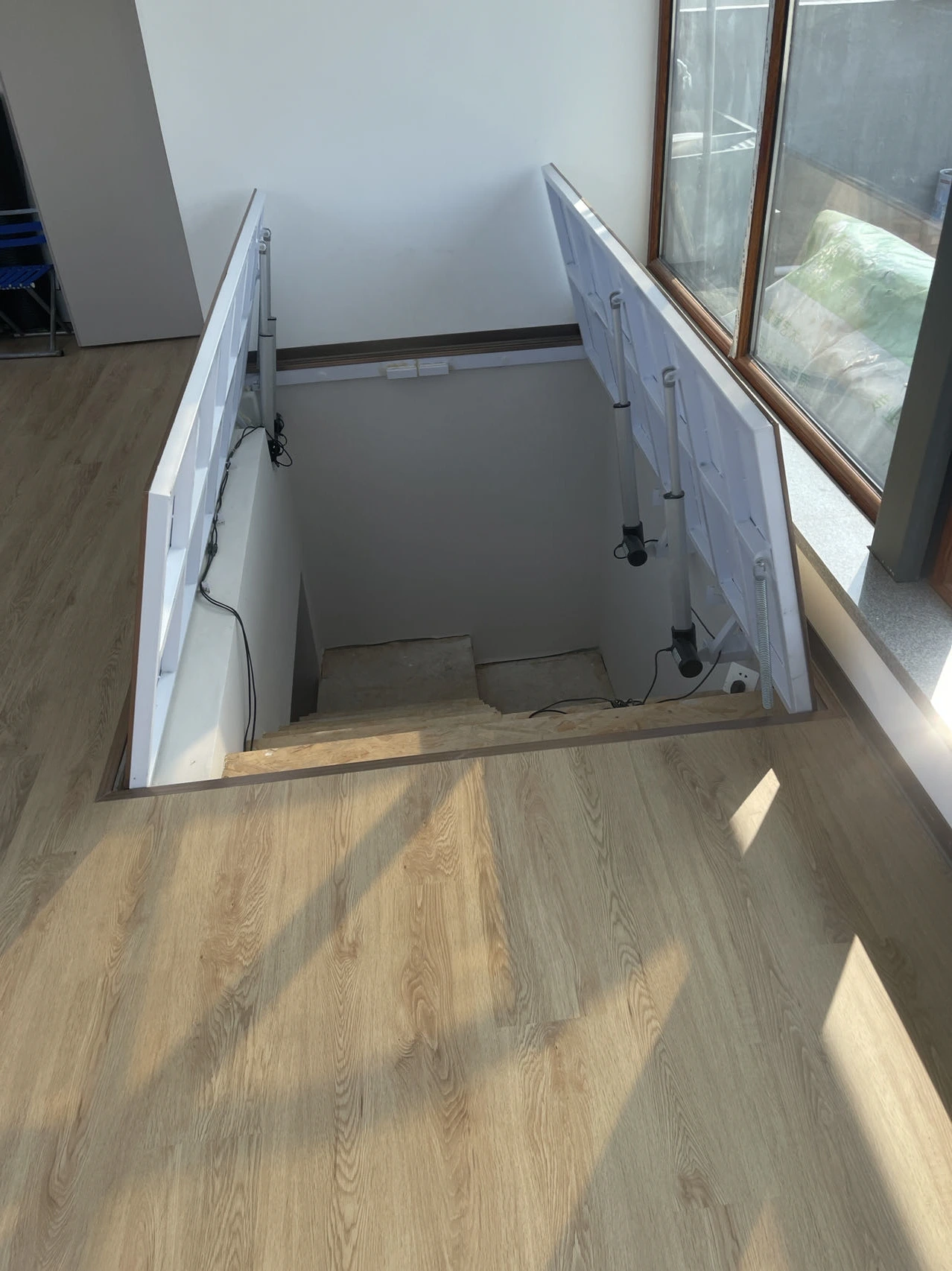
Comparison of three activation methods
The choice of door type should take into account the opening size, passage direction, overhead and side space, finishing weight, and drainage environment.
| Gate type | Main features | Key inspection |
|---|---|---|
| Side opening | The door panel flips open to one side, making it widely applicable. | Lateral opening space, hinge position and passage direction |
| Vertical opening | The door panel flips up | Upper space, opening height and support system |
| Open | Both doors opened separately. | Large opening divided into sections, door gap treatment and simultaneous use |
Side-opening doors are suitable for most conventional entrances
The side-opening design is intuitive and suitable for common entrances such as basements and storage rooms. However, it's important to avoid obstructing the view of walls, furniture, or main passageways when opened.
For vertical doors, check the space above.
Vertical opening doors flip up, suitable for specific spatial layouts. The design should assess door weight, opening height, overhead obstructions, and safety supports.
Double doors are suitable for larger openings
A double-leaf structure can divide a large door into two panels, reducing the size of each panel. Special attention needs to be paid to the door gaps, the fit between the two panels, and the paving layout.